
|
UNITED NATIONS COMMISSION ON HUMAN RIGHTS
GENEVA
GENEVA – 30 MARCH 2001.
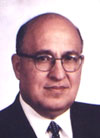
Communication by Dr Nabeel Shaath, Minister of
Planning and International Cooperation,
Head of the Palestine Delegation
Madam High Commissioner, Mr Chairman, Excellencies, Ladies and gentlemen, Dear friends,
Allow me to convey to you the greetings of the people of Palestine and their leadership, who highly appeciate your efforts to follow up the tragic developments in our region and to try and respond to the aggravating situation of Human rights in the Palestinian territory occupied by Israel since 1967. Thanks to High Commisoner Mary Robinson, for her brave trip to our land, to the International Commission of Inquiry, to Special Rapporteur Mr; Giacomelli, and thanks to you, Mr. Chairman.
Human rights, and the setting of universally binding norms of respect for human rights, is one of the major forms of progress that the world has witnessed for a half-century, indeed since the foundation of the UN system, the adoption of the UN Charter and the Universal Declaration of Human Rights. This progress, unfortunately, does not mean that human rights are less violated in practice, but it means that these violations are no longer deemed morally or legally acceptable. Practices once considered as legitimate means of war, or of government, have come to be defined as crimes. This has been the case with the practice of torture; this was the case with mass deportation and collective imprisonment at the beginning of the last century; this was the case with the use of gas during 1st World War. Recently, anti-personal landmines have been banned. The norms of what is and is not acceptable are indeed moving, and we should ask ourselves, today, whether we are doing enough to see to it that no violation of human rights, in principle and/or in practice, is ever deemed acceptable anywhere and under any circumstances. If such an awareness had existed earlier, and had the world been vigilant, such horrendous twentieth-century tragedies as the "Holocaust" may have never been allowed to happen.
Hence the importance of this session. Hence the importance of Palestine as an item on this session’s agenda. For ultimately, what we have to decide in the course of the coming days is whether the present and allegedly “low level” cruel and murderous war waged by Israel against the people of Palestine will be allowed to go on as “a necessary set of security measures”, and to set, as a result, a norm for “acceptable” crimes. The present siege and aggression conducted by the Israeli occupation forces must never be accepted as a necessary evil needed to maintain an illegal occupation. Only a day before yesterday, Israeli combat helicopters, once again, bombed Gaza and Ramallah, while in Hebron-El Khalil settlers went on rampage and organized “pogroms” against Palestinian inhabitants. Daily, children and old people, women and men are murdered, or locked in and starved, in the attempt to terrorize our people into submission. Today our cities and villages are under new attacks, and settlers have invaded the Abu Sneineh neighborhood of Hebron, while the occupation army escalates its aggressive operations.
Mr Chairman,
Dear friends,
I will not engage in an attempt to describe the Human rights situation in the occupied Palestinian territory. This situation is known to the distinguished members of this Commission. Excellent reports have been established by the Special Committee on Israeli practices affecting Human rights in the occupied Arab territories as well as by the Committee on the Exercise of the Inalienable Rights of the Palestinian People, which document abundantly the dramatic situation of Human rights under Israeli occupation. Most recently, High Commissioner Mary Robinson concluded her mission with a report that shall remain as a milestone of political courage and devotion to the truth and respect for the facts. But we must also salute YMCA, YWCA, Amnesty International, the FIDH, B’Tselem, the Law Society, Al Haq, PHRC, and all the International, Palestinian and Israeli Human rights organizations and NGOs who have, for many years now, followed and reported on human rights violations in the occupied Palestinian territory. They are almost all present among us today, and the invaluable data they have collected and documented is also available here.
I would like, however, to express my, and the PLO's, deep appreciation for the clarity and insight contained in the report that has been presented at this 57th session by the human rights inquiry commission established pursuant to Commission resolution s-5/1 of 19 October 2000 to investigate violations of human rights and humanitarian law in the occupied Palestinian territories after 28 September 2000. That report concludes with several recommendations, including the following:
"The framework for a final peaceful settlement and the process through which it is pursued should be guided at all stages by respect for human rights and humanitarian law and the full application of international human rights standards set out in the Universal Declaration of Human Rights and in applicable human rights instruments, in particular those relating to women, children and refugees.
An adequate and effective international presence needs to be established to monitor and regularly report on compliance by all parties with human rights and humanitarian law standards in order to ensure full protection of the human rights of the people of the occupied territories. Such an international mechanism should be established immediately and constituted in such a manner as to reflect a sense of urgency about protecting the human rights of the Palestinian people.
Protection needs to be accorded to the people of the occupied territories in strict compliance with the 1949 Geneva Convention Relative to the Protection of Civilians in Time of War (Fourth Geneva Convention). The High Contracting Parties, individually and collectively, need urgently to take appropriate and effective action to respond to an emergency situation calling for measures to alleviate the daily suffering of the Palestinian people flowing from the severe breaches of the Fourth Geneva Convention. Article One of the Convention places a duty on the High Contracting Parties "to respect and ensure respect" of the provisions of the Convention "in all circumstances"."
In addition, the report recommends that the High Contracting Parties should act with urgency to reconvene the Conference of the High Contracting Parties to the Fourth Geneva Convention, first convened in Geneva on 15 July 1999, and ěsuch a Conference should establish an effective international mechanism for taking the urgent measures needed.
These recommendations coincide with those made in the report made by the High Commissioner on her visit to the occupied Palestinian territories, Israel, Egypt and Jordan (8-16 November 2000).
I can add little to these prudent and responsible findings. However, no Palestinian can avoid concluding that over the past three decades the one thing that has stood between such reasonable and legally self-evident conclusions and their implementation has been a deficit of political will to make the law work.
Madame High Commissioner, Your Excellencies,
Let us accept our part of the blame.
Some ten years ago, prior to the convening of the Madrid Conference, former United States Secretary of State James Baker pointedly asked his Palestinian interlocutors whether they wanted to clean up Israel's occupation by insisting on Israel's de jure commitment to the fourth Geneva Convention to end that occupation by negotiating a political settlement. At that time, the answer seemed obvious. We needed to put an end to occupation, and to achieve a long-lasting peace.
We were not deterred from entering into interim arrangements of an unprecedented nature by the fact that Israel maintained its refusal as an Occupying Power to accept the de jure applicability of the Fourth Geneva Convention in the occupied Palestinian territories, or to respect it in practice. We were not deterred by the failure othe other High Contracting Parties to take effective measures up to that point to ensure Israel's respect. We were confident that, as we focused our efforts on building dialogue, cooperation and confidence between the Palestinian and Israeli national societies and their political leaderships, the political will to respect and ensure respect for the Fourth Geneva Convention would be found, by Israel, and, if not, by the other High Contracting Parties who were highly invested in the success of the process.
We maintained our cooperation and commitment to political dialogue as Israelís unlawful unilateral annexation measures and settlement programmes continued to transform and devastate the territorial, demographic and institutional habitat of the Palestinian population under occupation, causing great and palpable harm to their physical security and social and economic welfare, and creating facts that, if not reversed, would permanently frustrate the Palestinian people's exercise of their right to self-determination through the establishment of an adequately resourced and sovereign Palestinian state.
We persisted, despite mounting reservations, in the face of Israel's other unremitting violations of international humanitarian law, the unnecessary and unjustifiable harm that they continued to cause to the Palestinian civilian population, and the violence that they embodied.
Now, after the hard lessons of the past ten years, and the unproductive final efforts made at Camp David and Taba, the Palestinian leadership can not but recognise that Israelís systematic and persistent violations of international human rights and humanitarian law, and the failure of the High Contracting Parties to take effective protective measures pursuant to their duties under the Fourth Geneva Convention, have defeated Palestinian attempts to negotiate an agreement that would arrest and redress the harm inflicted on our people.
We are now faced with an uprising of a civilian population against an Occupying Power's unlawful and predatory abuses of its control over them and their habitat. We are now also faced with the serious escalation of Israeli violations of human rights and humanitarian law depicted in the human rights inquiry commission's report.
In the eyes of our people we have engaged in an unreciprocated seven-year cease fire in order to give political dialogue a chance. For the sake of our two peoples' future, Israeli-Palestinian relations must be re-established on new and sounder foundations based on reciprocated civility, and respect for human rights and the rule of law. The unilateral prosecution of active hostilities by an occupying army against defenseless civilian targets must cease. Our political dialogue must be salvaged and restored.
Before we can hope to accomplish these challenging but crucial objectives, Israel must quickly and decisively be made to respect the rules that must govern its occupation. The discipline of respect for international human rights and humanitarian law must be introduced into the peace process on its ground floor.
The Palestinian civilian population must be helped to recover from their aggravated recent trauma, and their confidence in the reliability of the protections guaranteed in law must be restored. While vital areas of their lives, and their physical security, remain under Israelís effective control, they must be feel secure that that control will not be abused. They must be made secure from the threat of collective penalties and acts of reprisal, including punitive closures. They must be made secure from the indiscriminate, disproportionate and excessive use of force, including the use of internationally-prohibited munitions. Their enjoyment of essential public services and their public institutions must not be allowed to be subjected to threat and disruption by financial strangulation or by punitive closures. They must be made secure from the immediate and durable harm caused by Israelís establishment and expansion of its illegal settlements. Respect for, and the unimpeded access of all believers to Christian and Muslim religious sites must be ensured. Finally, the burden of self-protection against grave breaches and gross violations of international humanitarian and human rights law that has been improperly placed upon the Protected Persons themselves must be removed.
To achieve the implementation of these basic protections, an international monitoring force mandated to discharge the duties of the participating High Contracting Parties pursuant to Article One of the Fourth Geneva Convention should be deployed throughout the occupied Palestinian territories until Israel accepts the de jure applicability of that Convention and establishes a satisfactory record of respect for its provisions, or until we achieve a permanent peace. The implementation of these protections will establish conditions under which the Palestinian National Authority will be able to effectively maintain security and public order within the areas under its jurisdiction and remove the practical obstacles and principled reservations that have arisen in respect of its cooperation with Israel. Unfortunately, yet another opportunity was lost a few days ago when the US used its veto to defeat another Security Council resolution meant to chieve just that purpose, a balanced resolution calling upon the parties to implement Sharm El Sheikh, resume negotiations on permanent settlement, and explore a mechanism to provide international protection.
Allow me, however, to emphasize the following features of the present situation:
Settlement activities, which have accelerated since the beginning of the Peace process, are a dynamic destructive factor, wherein there is no status quo, but a constant aggravation of the terms of occupation. Settlements are both conceptual and material obstacles to peace, while armed settlers, and armed settler-terrorism against Palestinian civilians are the human instruments of this illegal aggression. Armed settlers are not innocent civilians. Settlement activities, under the armed protection of the mighty occupation forces, have been the major factor of incitement. Deepening the grip of occupation of the land, settlements have constituted of hotbed of violence against Palestinians, and the Israeli bulldozer has become the symbol of this continued dispossession. The pursuit of settlement colonization and settler-violence have been the sparkle that has kindled every eruption of popular anger. It is the main element that has emptied of its content, deprived of its credibility and finally destroyed the peace-process, and to put an end to settlement is one of the main objectives of the present Intifada. This is true everywhere, in the Gaza Strip, in the West Bank and in occupied East-Jerusalem. Settlement activities were stepped up in an unprecedented manner under the government of Mr. Barak, and now Sharon has announced yet another settlement drive, especially in occupied East-Jerusalem.
While recognizing the legitimacy of resistance to occupation, we firmly and unambiguously condemn attacks against civilians and terrorism wherever it comes from. But one must understand that the Israeli policy of bombing and shelling of neighborhoods, political assassinations, repression and torture, and the multiform state of siege imposed upon the whole of Palestinian society only fuel resentment, anger, despair and resistance. One must also measure the growth of overt hate-talk and the unprecedented level of unabated anti-Arab racist incitement which now dominates the Israeli media and political discourse.
I want to seize this occasion to reassert in the most emphatic and categoric fashion that the Palestinian leadership is still totally committed to the strategic choice of Peace, and still totally committed to negotiating with the government of Israel a permanent settlement of the conflict on the basis of international legality, building upon the implementation of the agreements already signed and putting an end to the Israeli occupation of the Palestinian territory. I want to emphasize that we havnever turned our back to negotiations, never indulged in the fatal illusion that one could choose one’s partner in peace or in war. We engaged in this peace process in Madrid in 1991 with good faith and flexibility, with patience and hope. After eight years of unkept promises, or commitments not implemented, of obligations violated, of clauses and articles never materialized, our people is in the streets of our besieged country to demand an end to the violence of occupation, an end to the violence of colonization, an end to the violence of repression and aggression, an end to the denial of its most elementary human rights.
Occupation is illegal. Settlements are illegal. But resistance to the tyranny of an illegal foreign occupation is legal and legitimate. We condemn attacks against civilians, children and other “non-combatant populations”, but we cannot accept the supposedly “balanced” calls to “both sides” to put an end to “violence”. We are determined to explore all possible avenues in order to de-escalate the confrontation on the ground, and create conditions which will make it possible to revive negotiations. But it must be very clear that it is the occupying power who is in a position to set the de-escalation mechanism in motion. The government of Israel is the only party which has the capacity to put an end to the spiral of confrontation, terror and counter-terror. Not, as it seems now intent on doing, by intensifying both its aggression on the ground and its campaign against the PNA in the international arena, but by lifting the siege, freezing settlement activities and returning to the table of negotiations. There is unfortunately no sign to that effect. And so long as the Israeli government pursues its vain but murderous attempt to impose by force the settlement it could not sell to the Palestinian negotiators, the issue of Protection of Palestinian civilians will remain the central issue, the major challenge facing the international community in general, and this august commission in particular.
Mr Chairman,
Dear colleagues
Ladies and Gentlemen
27 years ago, in New York, in a historical speech which remains as a milestone in the relationship between the UN and the Palestinian people, President Arafat called upon the world not to let the olive branch of Peace fall from his extended hand. Unfortunately, this call is still relevant, in spite of the considerable progress and the promising breakthrough of the Oslo years. The dramatic regression of the last six months, from almost-peace to this semi-declared war, shows how fragile these incomplete achievements were, how threatened what has been achieved. Your decisions here, today and tomorrow, will weigh in a significant fashion upon the immediate future. Let us all work together to draw an effective barrier, on the ground, to the ongoing escalation. The need for international protection of the Palestinian people is the basic components of such a dispositive. Let us not miss this opportunity to throw our weight in the balance.
Thank you for your attention.
Home | Index | Related Sites | Feed Back